
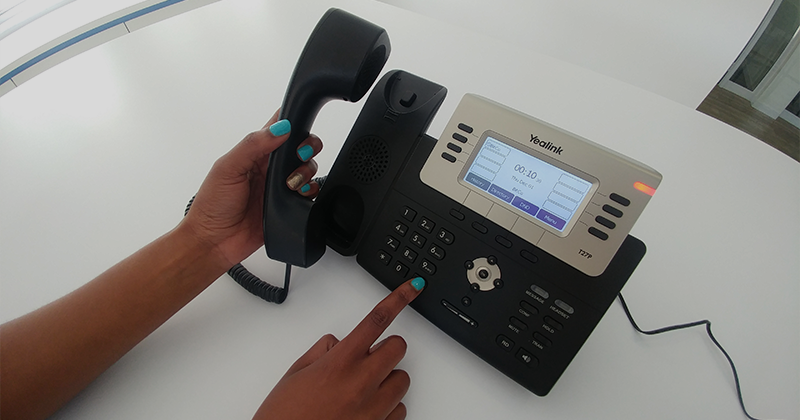
The rebirth of the office phone
The rise of the Digital Business Age has relegated the humble (but reliable) telephone to the antiques heap, along with the fax machine and dozens of other apparently “outdated” technologies we once relied so heavily upon. But have business telephone systems truly become redundant in the face of always-on, omnichannel customer service models? Or are business decision-makers simply unaware that office telephony has undergone a quiet digital revolution of its own?
Telephone woes
There’s really nothing worse than trying to contact someone but instead are passed from person to person until you forget why you picked up the phone in the first place. Now as a business, you certainly don’t want that to be the case should someone be contacting you to learn more about your offerings. An effective and efficient business telephone system is one that offers a faster communication method than email and one that streamlines good communication between organisations and customers, not one that hinders it. You’ll find simple changes could transform everyday telephone frustrations into seamless communication and with an evolving world of technology, it’s easy to upgrade your current system.
Cloud Private Branch Exchange (PBX)
Cloud PBX systems have become one of the most widely used telephone systems, and for good reason. This system enables businesses to automatically record calls, generate detailed reports and track performance over time. And because there’s a better communication flow between departments and staff members, it allows for more coordinated work processes overall. Every business has different communication needs that require tailoring to address them optimally, with Cloud PBX, the scope of your network system can be tailored according to these needs, and at no additional cost. Users of the PBX can also communicate externally (outside of their office), using different communication channels like Voice over IP.
Voice over IP (VoIP)
VoIP essentially utilises the internet connection you already have, enabling businesses to do more with less. It saves a lot on costs for one, because voice traffic travels over the internet or over private data network lines. It also allows for mobile working; all you’ll need is a VoIP number and an internet connection, and you can seamlessly work from wherever you are. Another advantage is that it increases productivity by enabling greater collaboration between organisations and their clients. Instead of using multi-way dial-in bridges, people can now connect over the same network. For business owners looking to adopt this telephony system, installation is a breeze that doesn’t require any prior tech knowledge as such. It uses software as oppose to hardware which also makes it far easier to alter and maintain.
Choosing the right system
Before committing to a telephone system for your business, there are a few things to consider. First off, you’ll need to determine whether your company needs actual physical telephones, or if you can get away with simply using mobile devices. If office telephones are on your list of inclusions, you’ll need to choose between a traditional landline or one that runs over the internet.
Irrelevant of which way you go, these digital solutions offer businesses new levels of cost-saving, efficiency and customer satisfaction – all of which is essential to maintaining a competitive edge in shaky economic times such as these.


